
Do all EV chargers fit all cars
What is DC charging and how does it work?
DC charging is the fastest way to charge an electric car. It’s the type of quick charging you do at rapid chargers at charging hubs or motorway service stations.
The number of DC public charging stations around the UK is growing fast. In December 2024, we had 14,471 rapid and ultra-rapid DC EV chargers, across 5,850 locations. That’s up an impressive 43% in the last 12 months. (Zapmap data)
This growing network of DC chargers will play a big part in encouraging more and more people to switch to EVs.
So, let’s look at how fast charging works, why it’s different to AC charging – and when it’s best to use a DC fast charger.
What does DC charging mean?
There are two types of electrical current: AC (alternating current) and DC (direct current).
AC is the type of electricity the national grid supplies to homes and businesses across the country. But pretty much any device with an in-built battery – including smart phones, laptops and electric cars – is charged with DC power.
A DC fast charger, also known as a DC rapid charger, converts the AC current from the grid into DC which can be safely and easily stored in a battery.
What is the difference between AC and DC?
An alternating current and direct current behave in very different ways – both have their advantages and uses.
Alternating current (AC)
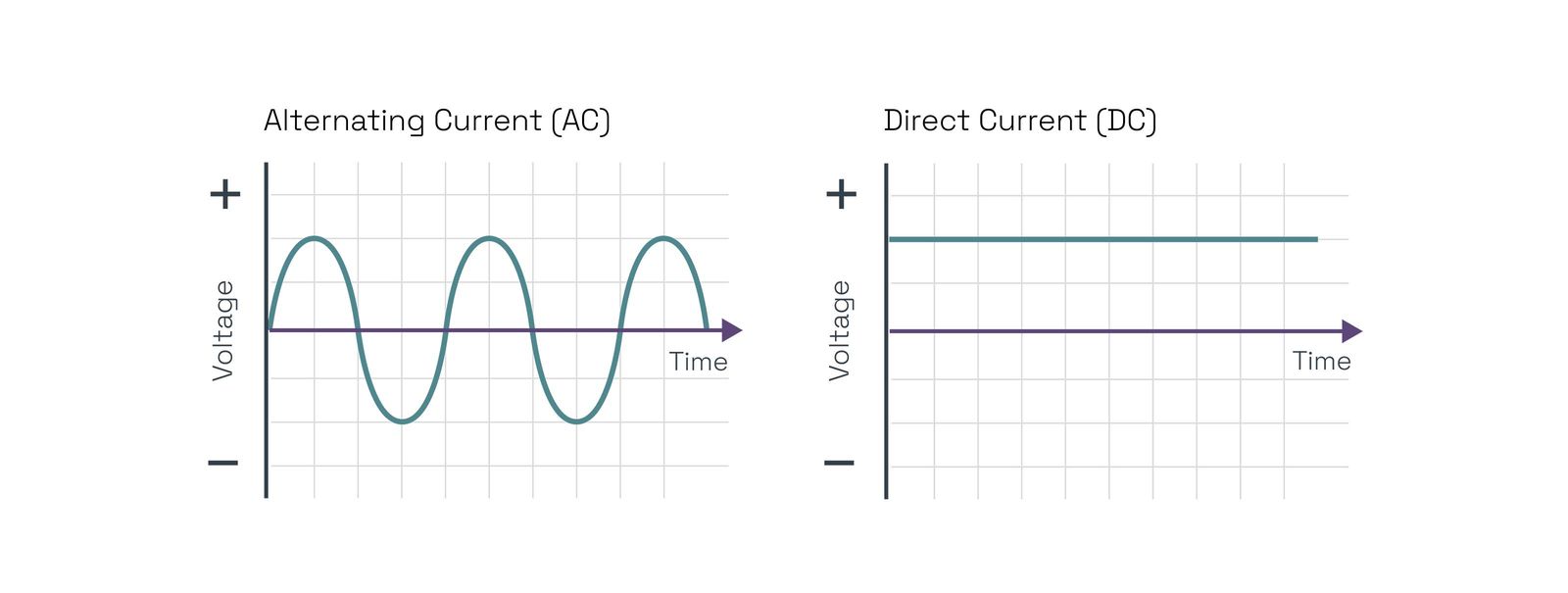
AC charge flows in two directions, alternates positive and negative voltages around the neutral causing the current to change direction many times a second. Historically, AC power was easier to transmit and convert from one level to another.
As mentioned, this is useful for transmitting power over long distances across the power grid. The electric current that flows through the power lines is set at a very high voltage to minimise energy loss. The voltage is then reduced before the electricity is sent into homes and businesses, so that it can power lights and domestic appliances safely.
Direct current (DC)
Direct current flows constantly in one direction. That consistency gives the DC charge a stable voltage level, which means it can be safely stored in a device’s battery.
The DC charge can also be easily regulated for a controlled energy release, which helps protect the battery and the device.
AC and DC currents compared
Electric vehicle drivers in the UK can easily power up at charging points across the country. But it’s worth keeping in mind that not all EV chargers fit all electric cars.
Home EV charging couldn’t be simpler: just use the cable supplied with your electric car. The same goes for on-street or workplace charging points. Plus, many electric cars are compatible with the rapid EV chargers at forecourts and motorway service stations.
There are now more than 1 million zero-emission battery electric cars on the road – and numbers are growing.
And the UK’s EV public charging network is growing just as fast. ChargeUK analysis shows there are now more than 930,000 public, home and workplace chargers, there’s now almost one for every electric car in the country. So there are many different charging options for EV drivers.
This quick guide will help you to understand which electric vehicle chargers fit your electric car. First, we’ll explain the two main types of EV charger (AC and DC). Then we’ll look at the different types of ports, plugs and cables that you’ll need to know about.
Types of Electric Car Chargers
There are two main types of electric vehicle chargers: AC (alternating current) and DC (direct current). Most electric cars can use both.
Not all electric vehicle chargers are the same. In fact, most EV drivers use a mix of charging types as it all depends on how quickly you would like to charge and whether you are charging at home or elsewhere.
AC chargers
AC chargers are the most common type in the UK, found in homes, on-street and at car parks. They send AC power from the national grid to an electric vehicle’s onboard charger, where it’s converted into DC power.
This charging is rate is limited by the capability of the onboard charger. That’s why onboard AC chargers are often called ‘slow chargers’ – though there are two categories:
- Slow AC chargers (deliver up to 7kW of power) – single phase
- Fast AC chargers (deliver 8kW to 49kW of power) – three phase

What is DC charging and how does it work?
DC charging is the fastest way to charge an electric car. It’s the type of quick charging you do at rapid chargers at charging hubs or motorway service stations.
The number of DC public charging stations around the UK is growing fast. In December 2024, we had 14,471 rapid and ultra-rapid DC EV chargers, across 5,850 locations. That’s up an impressive 43% in the last 12 months. (Zapmap data)
This growing network of DC chargers will play a big part in encouraging more and more people to switch to EVs.
So, let’s look at how fast charging works, why it’s different to AC charging – and when it’s best to use a DC fast charger.
What does DC charging mean?
There are two types of electrical current: AC (alternating current) and DC (direct current).
AC is the type of electricity the national grid supplies to homes and businesses across the country. But pretty much any device with an in-built battery – including smart phones, laptops and electric cars – is charged with DC power.
A DC fast charger, also known as a DC rapid charger, converts the AC current from the grid into DC which can be safely and easily stored in a battery.
What is the difference between AC and DC?
An alternating current and direct current behave in very different ways – both have their advantages and uses.
Alternating current (AC)
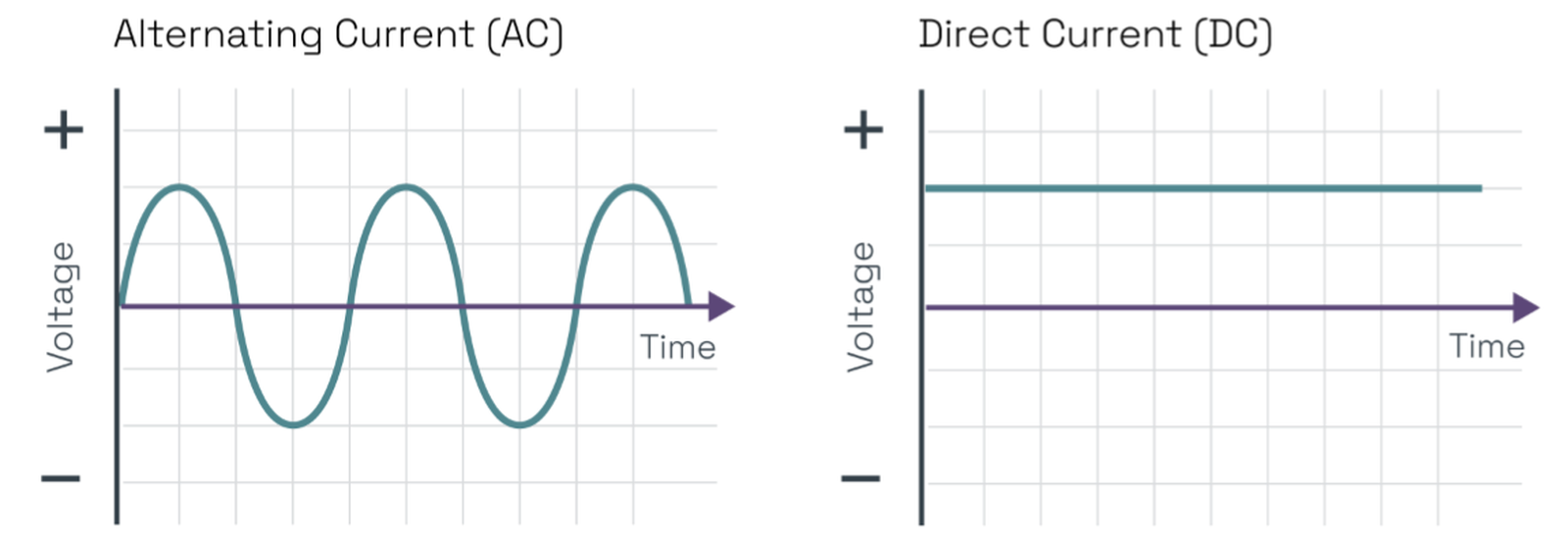
AC charge flows in two directions, alternates positive and negative voltages around the neutral causing the current to change direction many times a second. Historically, AC power was easier to transmit and convert from one level to another.
As mentioned, this is useful for transmitting power over long distances across the power grid. The electric current that flows through the power lines is set at a very high voltage to minimise energy loss. The voltage is then reduced before the electricity is sent into homes and businesses, so that it can power lights and domestic appliances safely.
Direct current (DC)
Direct current flows constantly in one direction. That consistency gives the DC charge a stable voltage level, which means it can be safely stored in a device’s battery.
The DC charge can also be easily regulated for a controlled energy release, which helps protect the battery and the device.
AC and DC currents compared
Electric vehicle drivers in the UK can easily power up at charging points across the country. But it’s worth keeping in mind that not all EV chargers fit all electric cars.
Home EV charging couldn’t be simpler: just use the cable supplied with your electric car. The same goes for on-street or workplace charging points. Plus, many electric cars are compatible with the rapid EV chargers at forecourts and motorway service stations.
There are now more than 1 million zero-emission battery electric cars on the road – and numbers are growing.
And the UK’s EV public charging network is growing just as fast. ChargeUK analysis shows there are now more than 930,000 public, home and workplace chargers, there’s now almost one for every electric car in the country. So there are many different charging options for EV drivers.
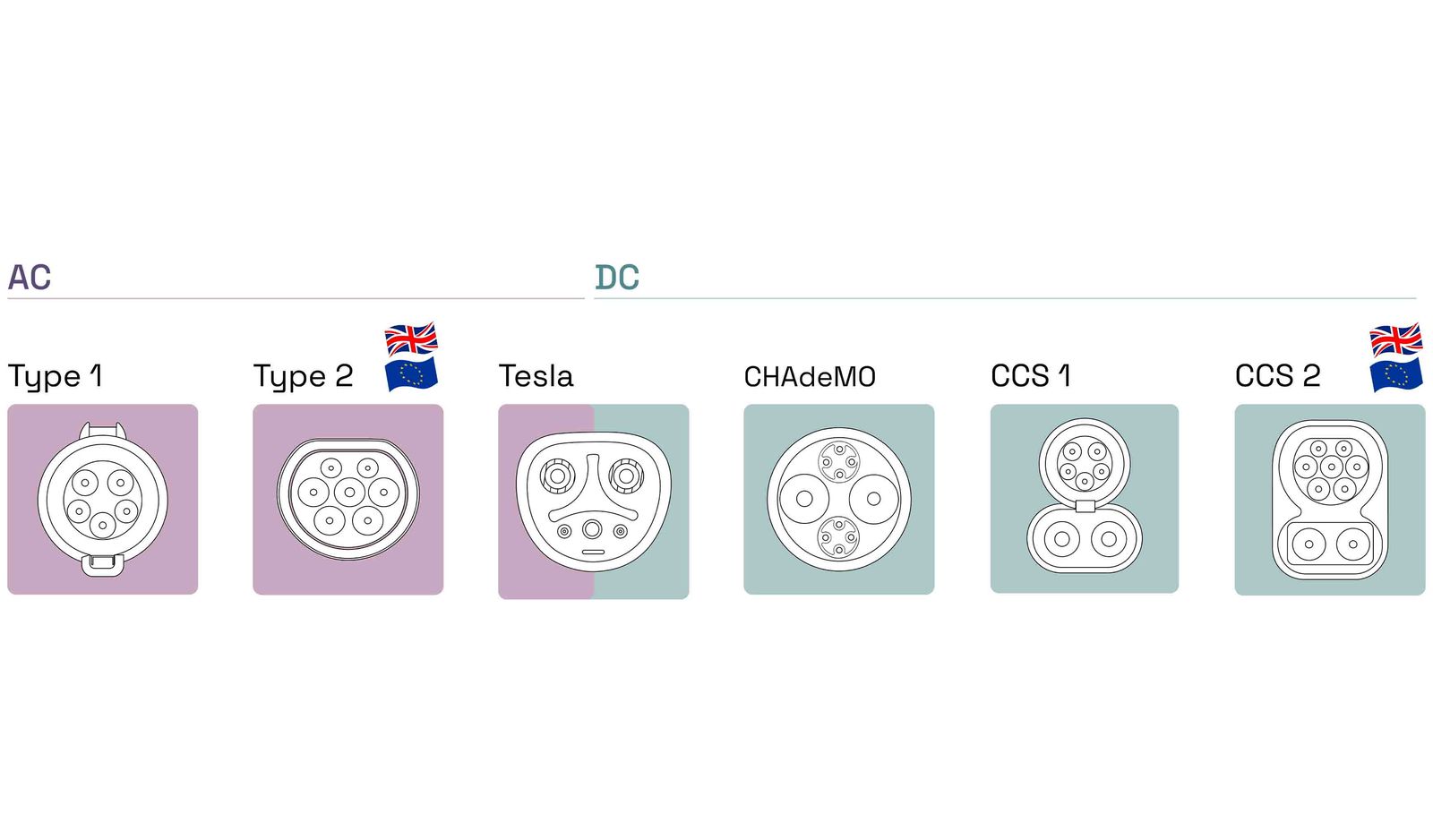
This quick guide will help you to understand which electric vehicle chargers fit your electric car. First, we’ll explain the two main types of EV charger (AC and DC). Then we’ll look at the different types of ports, plugs and cables that you’ll need to know about.
Types of Electric Car Chargers
There are two main types of electric vehicle chargers: AC (alternating current) and DC (direct current). Most electric cars can use both.
Not all electric vehicle chargers are the same. In fact, most EV drivers use a mix of charging types as it all depends on how quickly you would like to charge and whether you are charging at home or elsewhere.
AC chargers
AC chargers are the most common type in the UK, found in homes, on-street and at car parks. They send AC power from the national grid to an electric vehicle’s onboard charger, where it’s converted into DC power.
This charging is rate is limited by the capability of the onboard charger. That’s why onboard AC chargers are often called ‘slow chargers’ – though there are two categories:
- Slow AC chargers (deliver up to 7kW of power) – single phase
- Fast AC chargers (deliver 8kW to 49kW of power) – three phase
Electric vehicle drivers in the UK can easily power up at charging points across the country. But it’s worth keeping in mind that not all EV chargers fit all electric cars.
Home EV charging couldn’t be simpler: just use the cable supplied with your electric car. The same goes for on-street or workplace charging points. Plus, many electric cars are compatible with the rapid EV chargers at forecourts and motorway service stations.
There are now more than 1 million zero-emission battery electric cars on the road – and numbers are growing.
And the UK’s EV public charging network is growing just as fast. ChargeUK analysis shows there are now more than 930,000 public, home and workplace chargers, there’s now almost one for every electric car in the country. So there are many different charging options for EV drivers.
This quick guide will help you to understand which electric vehicle chargers fit your electric car. First, we’ll explain the two main types of EV charger (AC and DC). Then we’ll look at the different types of ports, plugs and cables that you’ll need to know about.
Types of Electric Car Chargers
There are two main types of electric vehicle chargers: AC (alternating current) and DC (direct current). Most electric cars can use both.
Not all electric vehicle chargers are the same. In fact, most EV drivers use a mix of charging types as it all depends on how quickly you would like to charge and whether you are charging at home or elsewhere.
AC chargers
AC chargers are the most common type in the UK, found in homes, on-street and at car parks. They send AC power from the national grid to an electric vehicle’s onboard charger, where it’s converted into DC power.
This charging is rate is limited by the capability of the onboard charger. That’s why onboard AC chargers are often called ‘slow chargers’ – though there are two categories:
- Slow AC chargers (deliver up to 7kW of power) – single phase
- Fast AC chargers (deliver 8kW to 49kW of power) – three phase
Electric vehicle drivers in the UK can easily power up at charging points across the country. But it’s worth keeping in mind that not all EV chargers fit all electric cars.
Home EV charging couldn’t be simpler: just use the cable supplied with your electric car. The same goes for on-street or workplace charging points. Plus, many electric cars are compatible with the rapid EV chargers at forecourts and motorway service stations.
There are now more than 1 million zero-emission battery electric cars on the road – and numbers are growing.
And the UK’s EV public charging network is growing just as fast. ChargeUK analysis shows there are now more than 930,000 public, home and workplace chargers, there’s now almost one for every electric car in the country. So there are many different charging options for EV drivers.
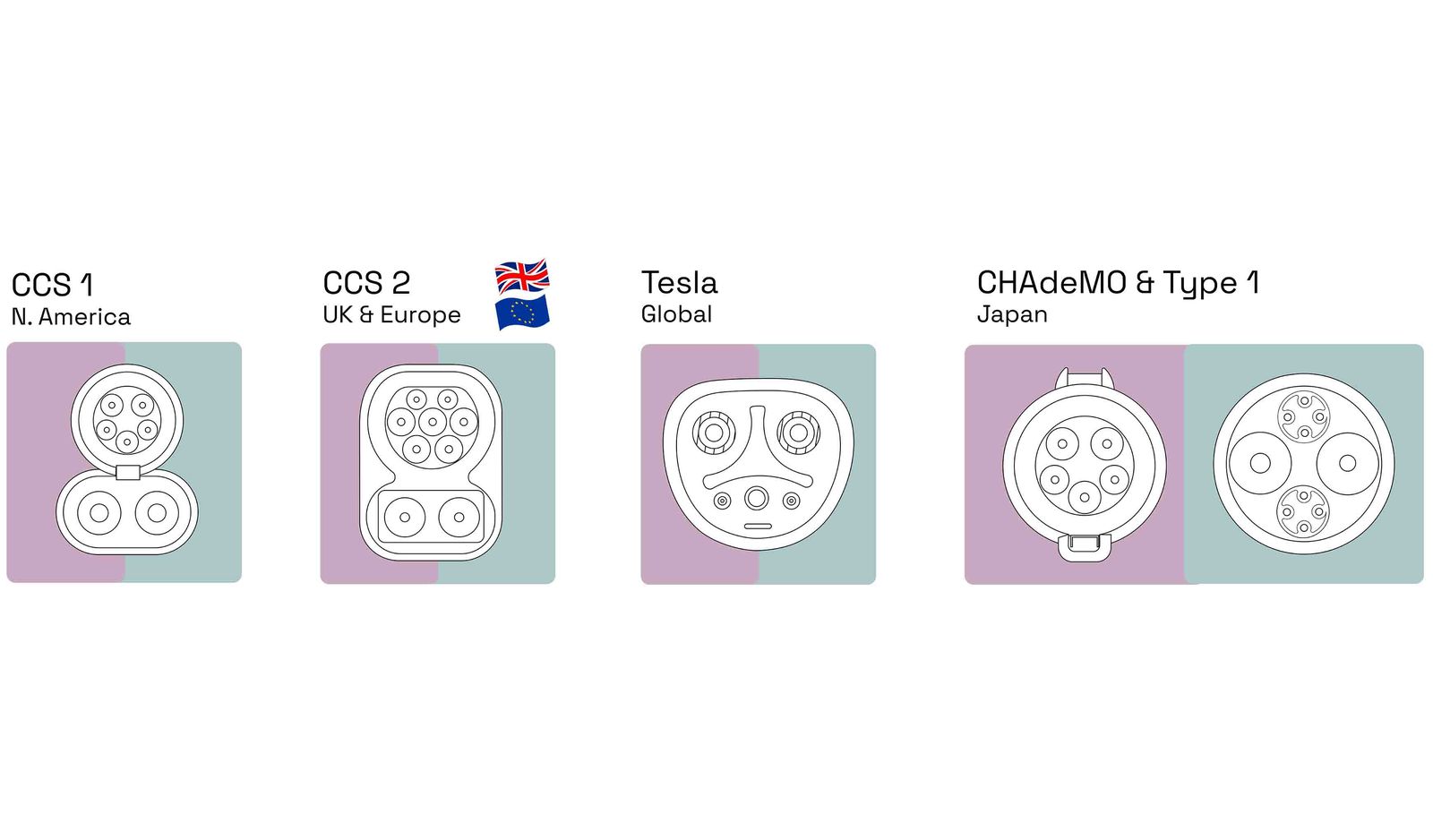
This quick guide will help you to understand which electric vehicle chargers fit your electric car. First, we’ll explain the two main types of EV charger (AC and DC). Then we’ll look at the different types of ports, plugs and cables that you’ll need to know about.
Types of Electric Car Chargers
There are two main types of electric vehicle chargers: AC (alternating current) and DC (direct current). Most electric cars can use both.
Not all electric vehicle chargers are the same. In fact, most EV drivers use a mix of charging types as it all depends on how quickly you would like to charge and whether you are charging at home or elsewhere.
AC chargers
AC chargers are the most common type in the UK, found in homes, on-street and at car parks. They send AC power from the national grid to an electric vehicle’s onboard charger, where it’s converted into DC power.
This charging is rate is limited by the capability of the onboard charger. That’s why onboard AC chargers are often called ‘slow chargers’ – though there are two categories:
- Slow AC chargers (deliver up to 7kW of power) – single phase
- Fast AC chargers (deliver 8kW to 49kW of power) – three phase
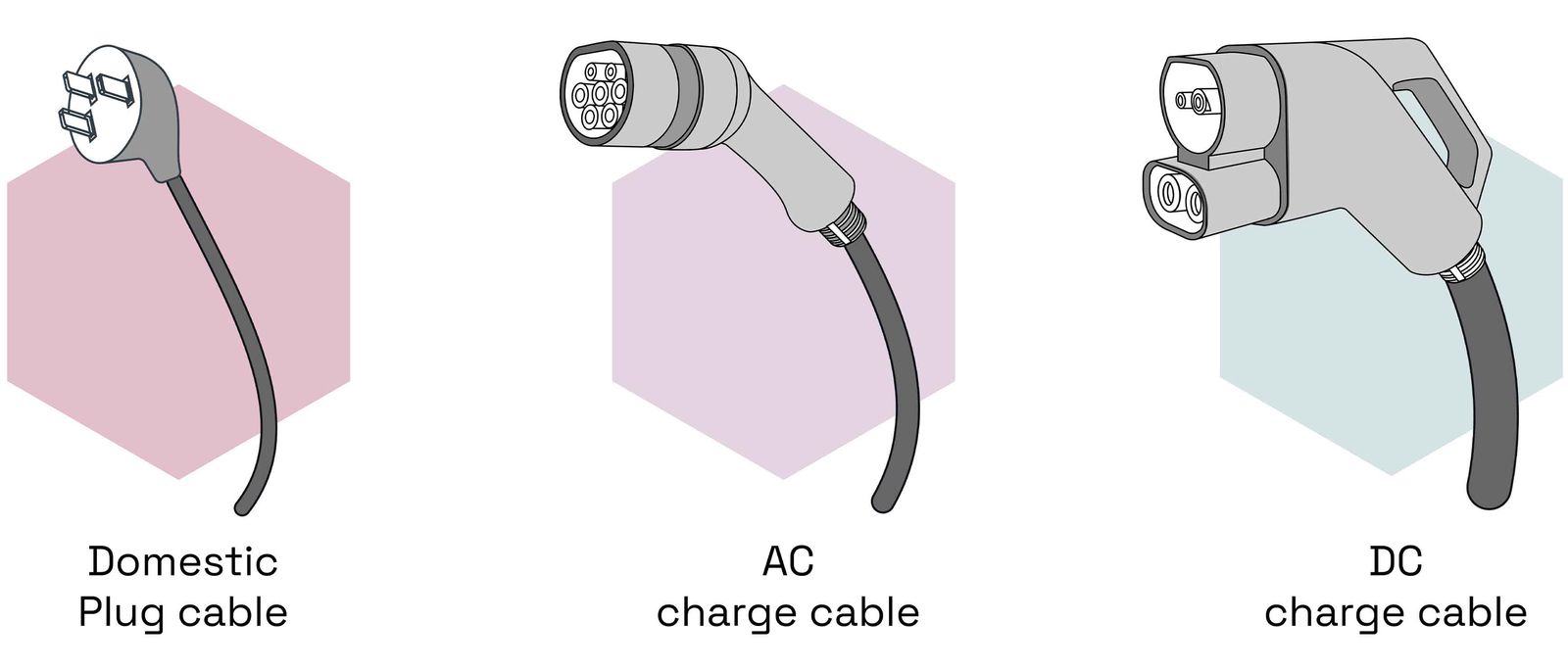
Electric vehicle drivers in the UK can easily power up at charging points across the country. But it’s worth keeping in mind that not all EV chargers fit all electric cars.
Home EV charging couldn’t be simpler: just use the cable supplied with your electric car. The same goes for on-street or workplace charging points. Plus, many electric cars are compatible with the rapid EV chargers at forecourts and motorway service stations.
There are now more than 1 million zero-emission battery electric cars on the road – and numbers are growing.
And the UK’s EV public charging network is growing just as fast. ChargeUK analysis shows there are now more than 930,000 public, home and workplace chargers, there’s now almost one for every electric car in the country. So there are many different charging options for EV drivers.
This quick guide will help you to understand which electric vehicle chargers fit your electric car. First, we’ll explain the two main types of EV charger (AC and DC). Then we’ll look at the different types of ports, plugs and cables that you’ll need to know about.
Types of Electric Car Chargers
There are two main types of electric vehicle chargers: AC (alternating current) and DC (direct current). Most electric cars can use both.
Not all electric vehicle chargers are the same. In fact, most EV drivers use a mix of charging types as it all depends on how quickly you would like to charge and whether you are charging at home or elsewhere.
AC chargers
AC chargers are the most common type in the UK, found in homes, on-street and at car parks. They send AC power from the national grid to an electric vehicle’s onboard charger, where it’s converted into DC power.
This charging is rate is limited by the capability of the onboard charger. That’s why onboard AC chargers are often called ‘slow chargers’ – though there are two categories:
- Slow AC chargers (deliver up to 7kW of power) – single phase
- Fast AC chargers (deliver 8kW to 49kW of power) – three phase
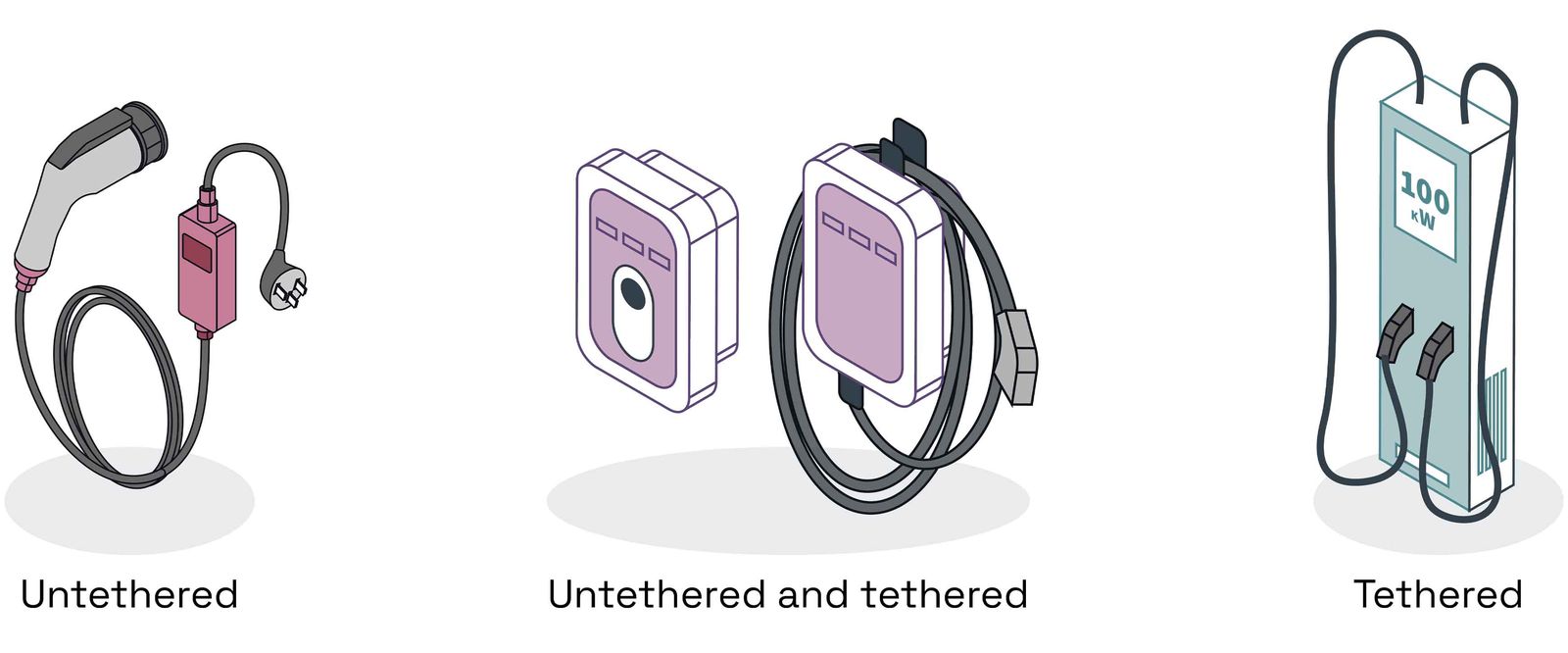
Electric vehicle drivers in the UK can easily power up at charging points across the country. But it’s worth keeping in mind that not all EV chargers fit all electric cars.
Home EV charging couldn’t be simpler: just use the cable supplied with your electric car. The same goes for on-street or workplace charging points. Plus, many electric cars are compatible with the rapid EV chargers at forecourts and motorway service stations.
There are now more than 1 million zero-emission battery electric cars on the road – and numbers are growing.
And the UK’s EV public charging network is growing just as fast. ChargeUK analysis shows there are now more than 930,000 public, home and workplace chargers, there’s now almost one for every electric car in the country. So there are many different charging options for EV drivers.
This quick guide will help you to understand which electric vehicle chargers fit your electric car. First, we’ll explain the two main types of EV charger (AC and DC). Then we’ll look at the different types of ports, plugs and cables that you’ll need to know about.
Types of Electric Car Chargers
There are two main types of electric vehicle chargers: AC (alternating current) and DC (direct current). Most electric cars can use both.
Not all electric vehicle chargers are the same. In fact, most EV drivers use a mix of charging types as it all depends on how quickly you would like to charge and whether you are charging at home or elsewhere.
AC chargers
AC chargers are the most common type in the UK, found in homes, on-street and at car parks. They send AC power from the national grid to an electric vehicle’s onboard charger, where it’s converted into DC power.
This charging is rate is limited by the capability of the onboard charger. That’s why onboard AC chargers are often called ‘slow chargers’ – though there are two categories:
- Slow AC chargers (deliver up to 7kW of power) – single phase
- Fast AC chargers (deliver 8kW to 49kW of power) – three phase
What’s the difference between AC and DC electric vehicle chargers?
AC charging
As the name suggests, an AC charger sends AC power into an electric car. The car’s built-in charger then converts the AC power to DC power, before sending it to the vehicle’s battery.
The conversion limits electric car charging speeds, which is why AC chargers are often called ‘slow chargers’. You’ll find AC chargers in homes, streets and car parks.
DC charging
A DC fast charger is quicker than its AC counterpart. A DC fast charger does the AC-DC conversion before sending it directly to the EV battery.
EV fast charging was recently standardised by the UK Government as rapid and ultra-rapid DC chargers. They are found at charging hubs and motorway service stations, as well as some workplaces and shopping centres.
A public rapid and ultra-rapid DC fast charger cannot be installed at home due to the high amount of AC power they need from the grid. This is why EV fast charging is available in public places like retail parks and motorway services, as there is a general business need for high levels of electricity.
AC and DC chargers compared
DC charging is very fast indeed. Blah DC charging is very fast indeed. Blah DC charging is very fast indeed. Blah
Register your interest
Complete the form below to find out more about our pilot programme and how to benefit early from our innovative technology.
All about Future Flight Programme
Electric vertical take off and landing aircraft (eVTOL) uses electric power to hover, take off, and land vertically. They could revolutionize inter-and-intra-city movement, providing quick, direct, and clean mobility.
Learn more

About the author
Head of Marketing
Kate’s 20+ year’s experience in marketing spans rapidly scaling climate businesses, a global B2C megabrand and various sectors from engineering to motorbikes to professional services consulting.
Driven to use her marketing skills in profit with purpose businesses, she believes Petalite’s technology innovation is a true market disruptor and will help accelerate the world’s transition to a greener economy.